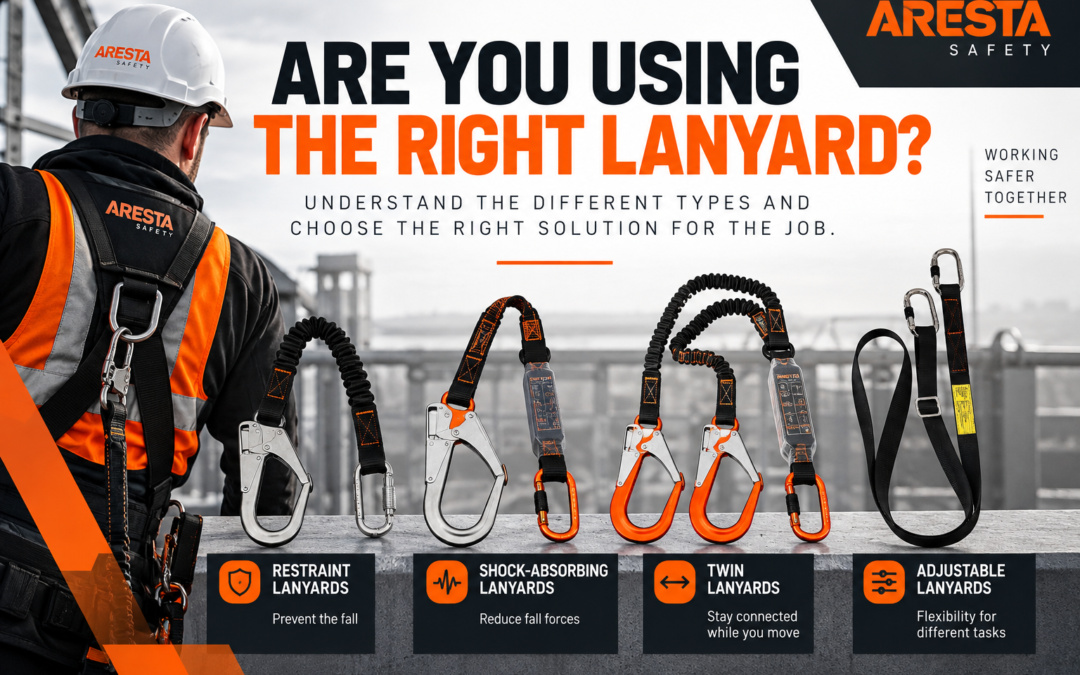
When working at height, choosing the right harness is only part of the equation. The lanyard connecting the user to the anchor point is a critical part of the overall safety system — and different tasks, environments and risks can require very different solutions.
From preventing a worker from reaching an exposed edge to arresting a fall should one occur, understanding the different types of lanyard can help you select the right equipment for the job.
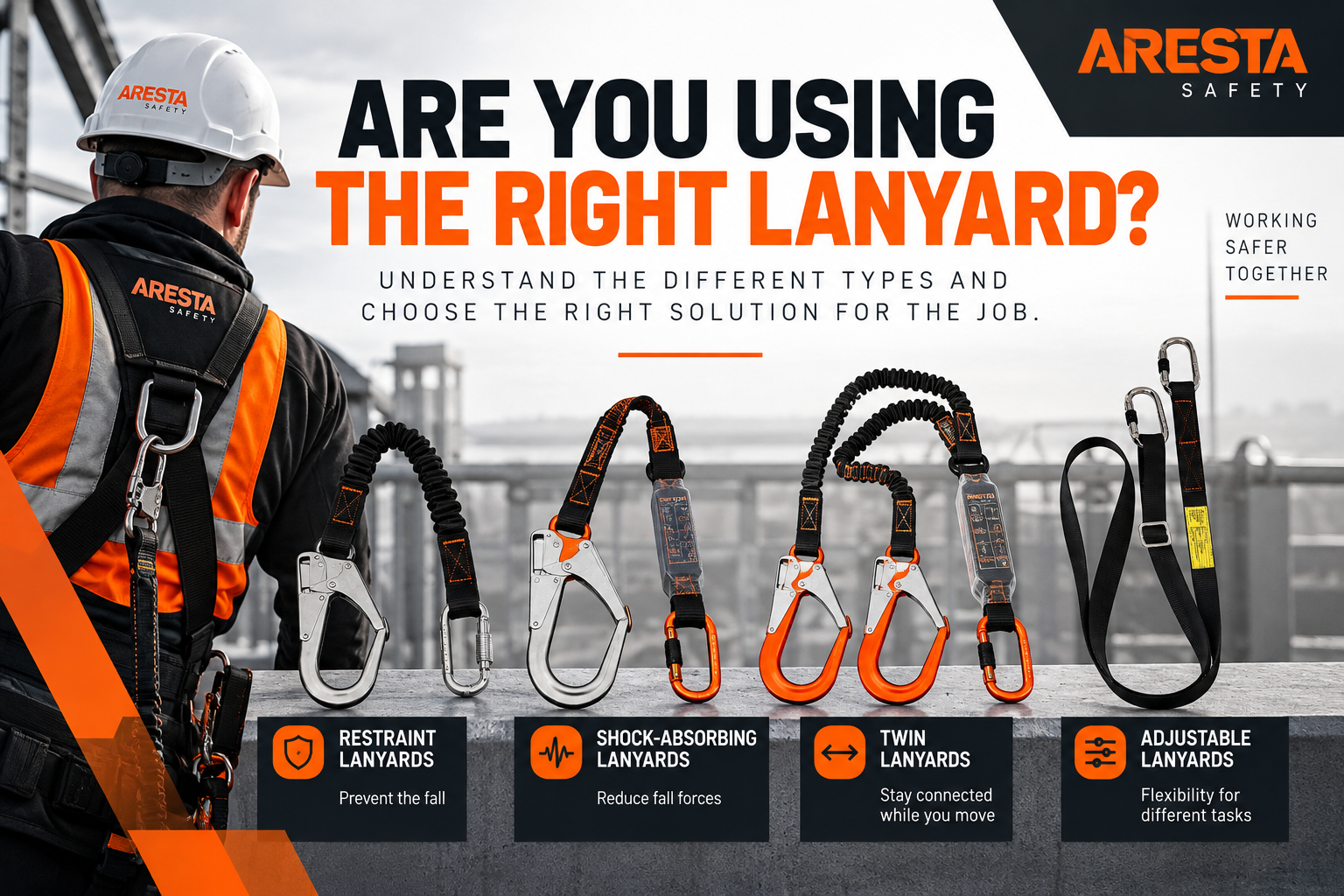
–Restraint Lanyards – Prevent the Fall
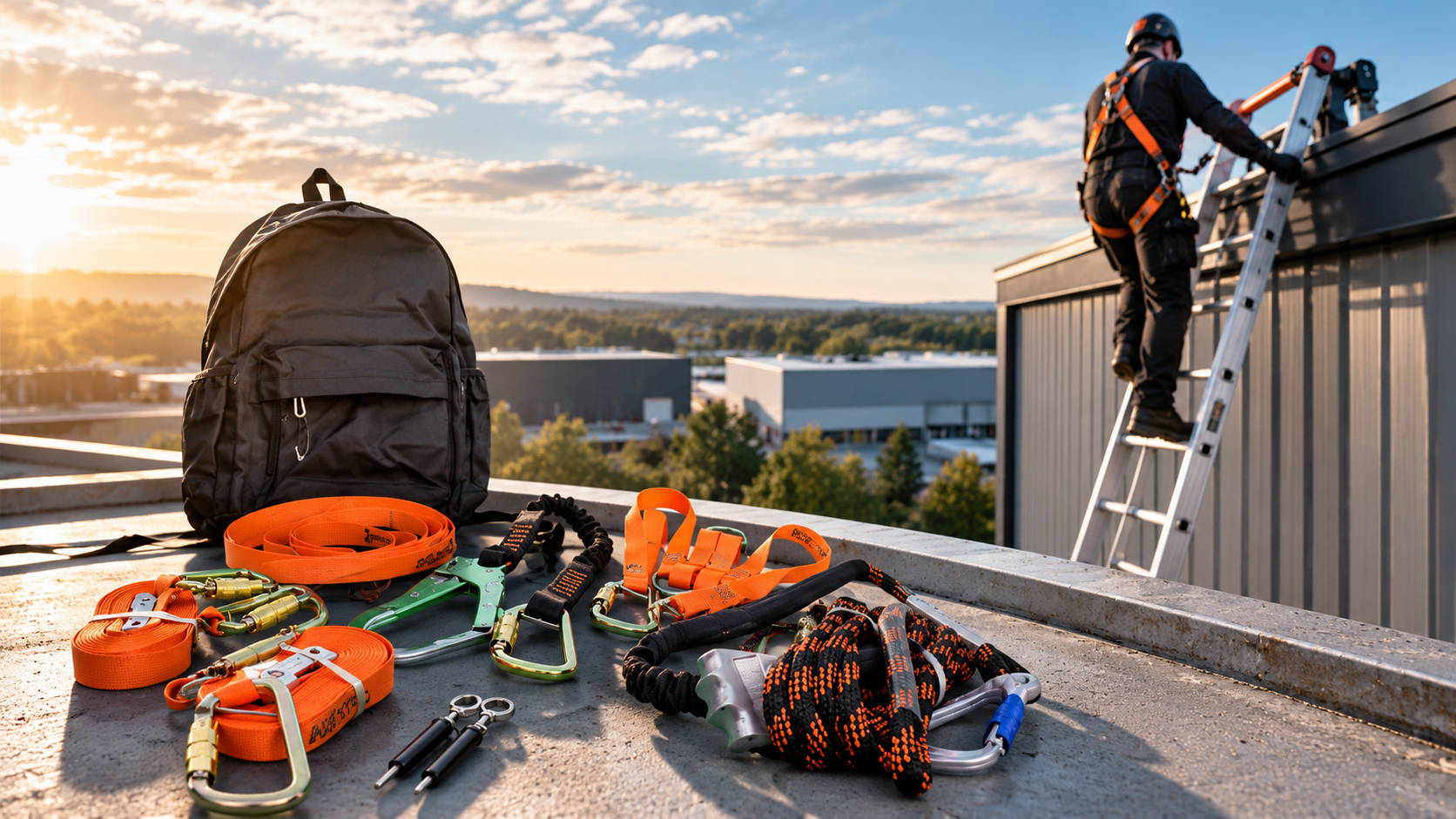
A restraint lanyard is designed to prevent the user from reaching an area where a fall could occur. When correctly selected and set up, the lanyard restricts the worker’s movement so they cannot reach an unprotected edge or other fall hazard. Ideal for: rooftop work, edge work and situations where preventing access to the fall hazard is the priority.
Key point: Restraint is about preventing the fall from happening, rather than stopping someone once they have fallen.
–Shock-Absorbing Lanyards – Reduce Fall Forces
Where there is a genuine risk of a fall, a suitable fall-arrest system may be required. A shock-absorbing lanyard incorporates an energy absorber designed to deploy during a fall, helping to limit the forces transferred to the user and the anchorage. Ideal for: working-at-height applications where a fall risk cannot be completely eliminated.
Remember that fall clearance is important. The complete system — including the lanyard, energy absorber, harness, connectors and anchor point — must be appropriate for the application.
–Twin Lanyards – Stay Connected
For workers who need to move between anchor points, a twin lanyard can provide greater freedom of movement while enabling continuous connection. The two legs allow the worker to transfer from one suitable anchor point to another without simply disconnecting from the system.
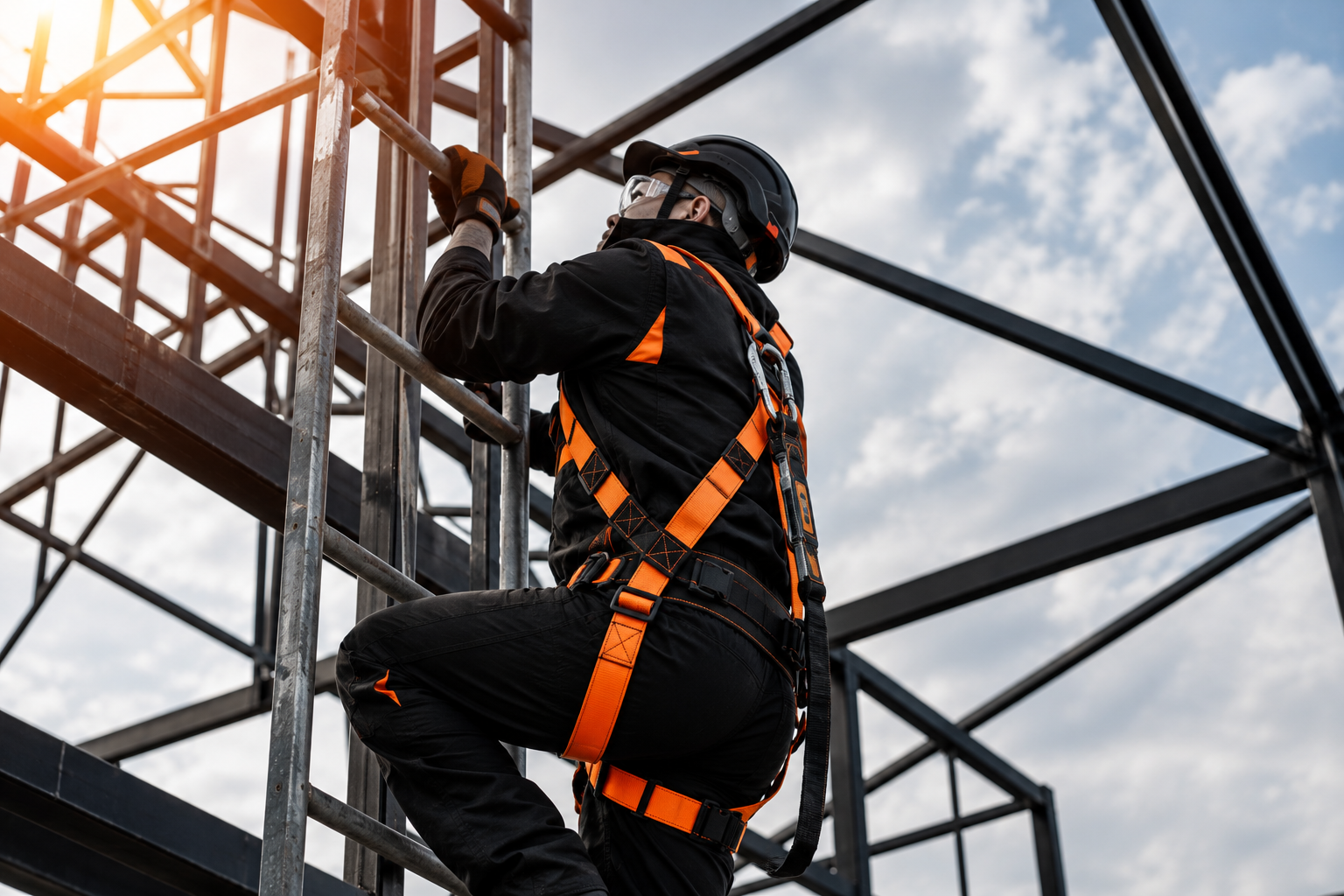
Ideal for: scaffolding, steelwork and structures where workers regularly need to move between anchor points.
Why two legs?
The principle is simple: connect the second leg to the next suitable anchor before disconnecting the first. This helps the worker remain protected while moving around the structure.
–Adjustable Lanyards – Flexibility for the Task
Not every working environment is the same. An adjustable lanyard allows its effective length to be altered to suit the task and working position, subject to the equipment’s intended use and manufacturer’s instructions.
Ideal for: varied working areas and applications where greater control over positioning or reach is required.
Keeping unnecessary slack to a minimum can also form an important part of correctly configuring a restraint or positioning system.
–One Lanyard Doesn’t Suit Every Job
Before selecting a lanyard, consider:
- What is the intended system — restraint, positioning or fall arrest?
- Where is the anchor point?
- How much movement does the worker need?
- Is there sufficient fall clearance?
- Could the worker encounter an edge or other hazard?
- Are the harness, connectors, lanyard and anchor compatible?
- What rescue arrangements are in place if a fall occurs?
Most importantly, don’t select equipment simply because it’s what is already in the van or stores. Start with the task and the risk, then select the appropriate system.
Check Before You Connect
Whatever lanyard you use, it should be checked before use in accordance with the manufacturer’s instructions. Look for signs of damage or deterioration to the webbing, stitching, connectors and energy absorber, as applicable.
Equipment showing damage, excessive wear or anything that casts doubt on its safety should not be used and should be dealt with in accordance with the manufacturer’s instructions and your inspection procedures.
ARESTA Safety can help you find the right equipment for the task, helping you keep your workforce protected while working at height.