

Working from a ladder is something many people do every day, whether on construction sites, in warehouses, or carrying out maintenance work. Yet despite their familiarity, ladders remain one of the most common causes of workplace falls.
Many ladder-related accidents aren’t caused by equipment failure—they happen because of small mistakes that can easily be avoided with the right knowledge and preparation.
Here are five of the most common ladder safety mistakes and how you can help prevent them.
1. Using the Wrong Ladder for the Job
Not all ladders are designed for the same purpose. Choosing the wrong type or size of ladder can compromise stability and increase the risk of a fall.
Before starting any task, ask yourself:
- Is the ladder suitable for the height I need to reach?
- Is it designed for the environment I’m working in?
- Does it have the appropriate load rating for me and my equipment?
Using a ladder that is too short often leads to overreaching, while using one that isn’t designed for industrial use can create unnecessary hazards.
2. Overreaching While Working
One of the most common causes of ladder accidents is overreaching.
When your belt buckle or torso moves beyond the ladder’s side rails, your centre of gravity shifts, making the ladder much more likely to tip sideways.
Instead:
- Keep your body centred between the stiles.
- Climb down and reposition the ladder whenever necessary.
- Take a few extra minutes rather than risking a fall.
Remember, moving the ladder is always safer than stretching “just a little bit further.”
3. Setting the Ladder Up Incorrectly
Even the highest-quality ladder becomes unsafe if it’s not positioned correctly.
Common setup mistakes include:
- Placing the ladder on uneven or soft ground.
- Using the wrong angle.
- Failing to secure the ladder where appropriate.
- Positioning it in doorways or busy walkways without protection.
A leaning ladder should generally be positioned using the 1 in 4 rule—for every four metres of height, the base should be one metre away from the structure.
Always check that:
- The ground is firm and level.
- The feet are secure.
- The ladder cannot slip or move during use.
4. Ignoring Pre-Use Inspections
Ladders should be inspected before every use.
It only takes a few moments to identify damage that could lead to an accident.
Look for:
- Bent or damaged stiles
- Cracked rungs
- Loose fixings
- Damaged feet
- Signs of corrosion
- Excessive dirt, oil or grease
If a ladder is damaged, remove it from service immediately and report it according to your company’s inspection procedures.
Never assume someone else has already checked it.
5. Carrying Too Much While Climbing
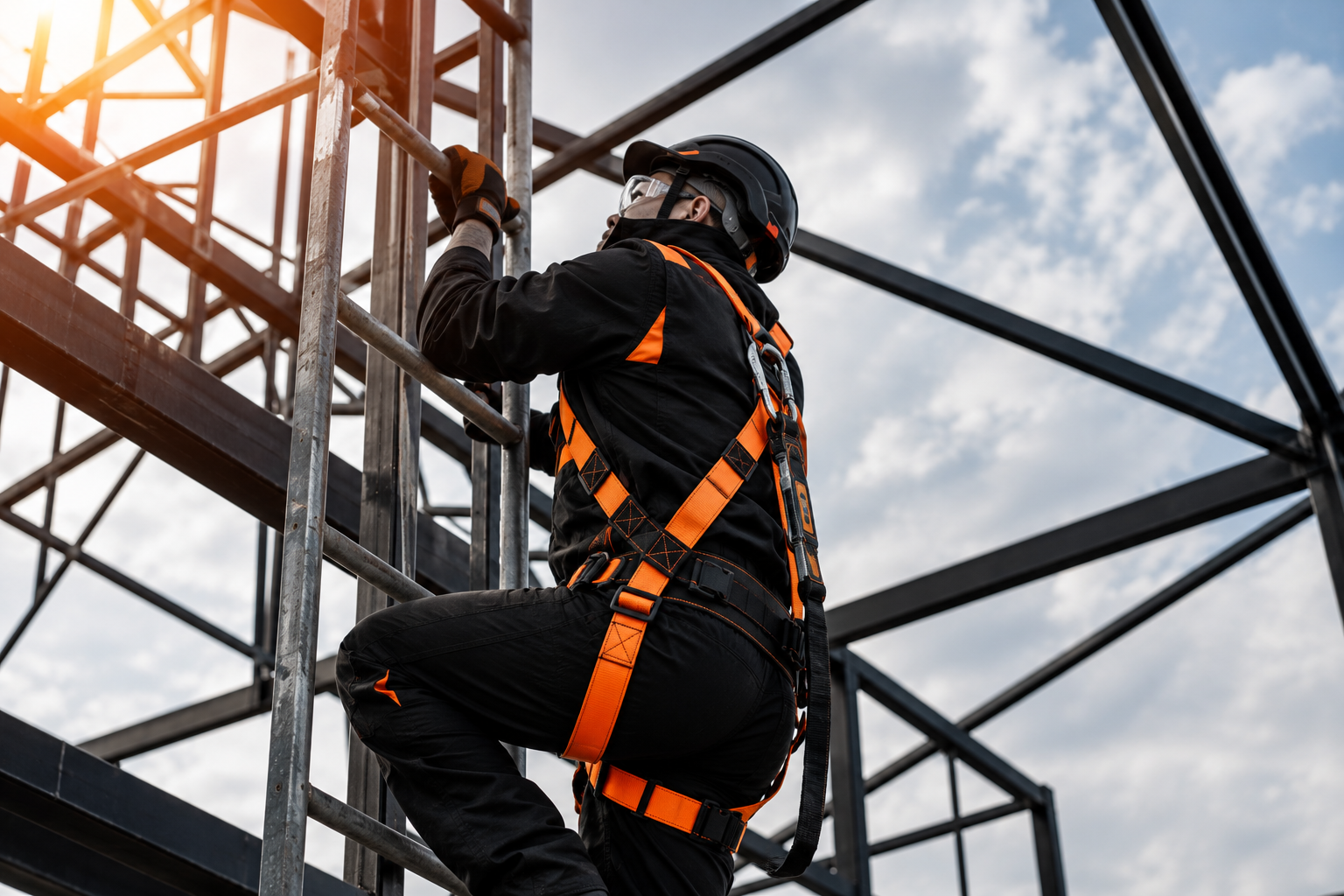
Maintaining three points of contact is one of the simplest ways to improve ladder safety.
Trying to carry heavy tools or materials while climbing often means:
- Losing balance
- Missing a rung
- Reducing grip
- Increasing fatigue
Instead, consider using:
- Tool belts
- Tool tethering systems
- Hoists or lifting equipment
- A colleague to pass equipment once you’re safely positioned
Keeping both hands free significantly improves stability and control.
If you’re unsure whether a ladder is the right access solution for your task, always seek guidance before starting work.
At ARESTA Safety, we’re committed to helping businesses create safer working environments through high-quality height safety equipment, expert advice, and practical safety solutions.
Need help choosing the right equipment for working at height? Get in touch with the ARESTA Safety team to discuss your requirements or explore our range of ladder safety and fall protection products.